
An honest look at what drives land clearing cost in Washington — density, terrain, disposal and permits — and why per-acre numbers are so unreliable.
“How much does it cost to clear an acre?” is the most common question about land clearing, and the honest answer is frustrating: it depends, and it depends by a lot. Two properties of identical size can differ in clearing cost by a factor of five or more. Understanding why puts you in a far better position to budget realistically and to read a quote critically.
Why There Is No Simple Per-Acre Price
The instinct is to want a number per acre. The problem is that acreage is one of the weakest predictors of what a clearing job actually costs. What matters far more is what is on the acre, what the ground is like underneath, and where the debris ends up.
A flat acre of light brush with road access is a straightforward day of work. An acre of mature second-growth Douglas fir on a slope, with stumps to remove and everything hauled off, is a fundamentally different job that can take a week and cost many times as much. Same acreage, entirely different price — because the acreage was never the driver.
The Four Things That Actually Drive Cost
Density and Size of Vegetation
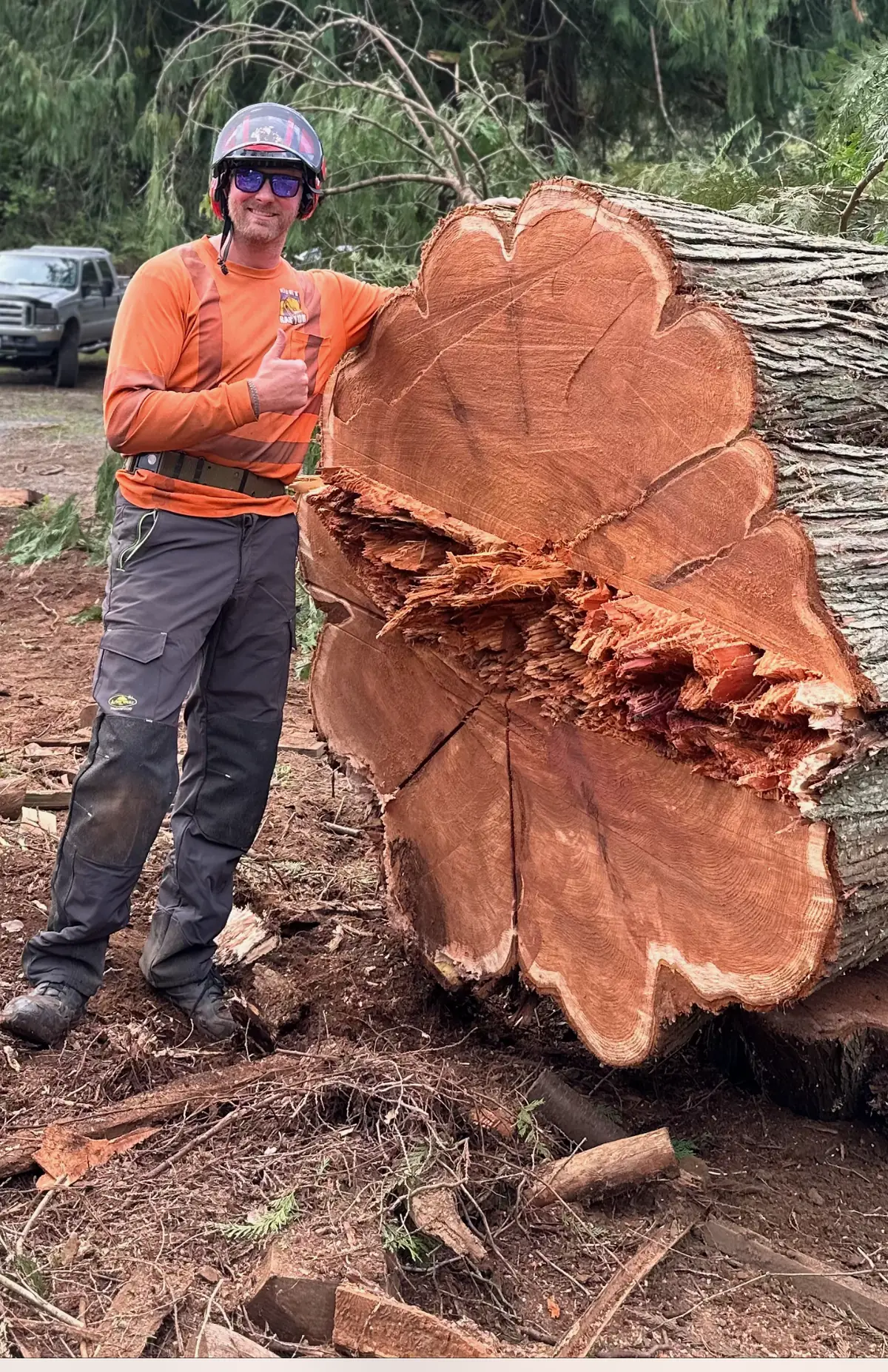
This is the biggest single factor. Clearing light blackberry and scrub is quick. Removing mature trees is slow, skilled and generates enormous volumes of debris. A property’s stem count and average trunk diameter tell you far more about cost than its acreage does. A heavily wooded lot can carry ten times the material of an open one of the same size.
Terrain and Access
Slope, wet ground and narrow access all limit which machines can work and how efficiently. Equipment that rolls easily across flat, dry ground struggles on a saturated slope, and some sites cannot take the most efficient machine at all. In the Pacific Northwest, where ground is wet for much of the year and terrain is rarely flat, this is a bigger factor than in drier, flatter regions.
Disposal Method
Once vegetation is down, it has to go somewhere, and burning is restricted across most of the populated Puget Sound region. That leaves three options: chip it on site, grind stumps in place, or haul it out. Chipping is cheapest where there is space to leave the chips. Hauling everything off costs more but leaves the cleanest result. The right choice depends on the site and on what you want the finished ground to look like.
Permits
Clearing permits, tree-retention requirements and critical-area rules all add cost and time, and they vary by jurisdiction. Clearing near a wetland, stream or steep slope can require an assessment and a permit even for a small area — and clearing without the right approvals risks fines that dwarf the cost of the clearing itself.
Where People Can Save Money
A few decisions genuinely reduce cost:
- Keep usable wood. If you have a use for firewood or timber, having the crew buck and stack it rather than grinding and hauling it reduces disposal volume — and disposal is a real line item.
- Clear only what you need. Retaining healthy trees where they do not conflict with your plans lowers cost and adds value to the finished property. Not every tree needs to come down.
- Combine the clearing with the next phase. If the lot is being cleared for a build, having the same crew handle the clearing, the excavation and the haul-off avoids paying for multiple mobilisations. This is where a company that does both clearing and excavation has a real cost advantage over one that only clears.
What a Real Quote Looks Like
A trustworthy land clearing quote comes from someone who has walked the actual ground. It reflects the real density, the real terrain, the real access and a real plan for the debris. It should also be clear about permits — what applies, and whose responsibility it is to secure them.
Be cautious of a firm number given over the phone before anyone has seen the property. Clearing has too many site-specific variables for that number to be reliable, and a low phone quote has a way of climbing once the crew arrives and sees what they are actually dealing with.
The Bottom Line
Land clearing cost is driven by density, terrain, disposal and permits — not by acreage alone. The wide range in per-acre figures you will find online reflects exactly this: they are averaging together jobs that have almost nothing in common. The only number that means anything is one based on your specific property.
DirtRaptor clears land across Snohomish, King, Skagit and Pierce County, and because we handle both the clearing and the excavation with our own trucks, we can often do it on a single mobilisation. For an accurate quote based on a walk of your actual property, request one here.
Frequently Asked Questions
How much does it cost to clear an acre of land in Washington?
+
The honest answer is that the range is enormous. Light brush on flat, accessible ground sits at the low end. An acre of dense, mature Pacific Northwest timber on a slope, with stump removal and full haul-off, sits many times higher. Because the variables swing the cost so widely, a per-acre figure quoted without a site visit is close to meaningless — the only accurate number comes from someone walking the actual ground.
What makes land clearing more expensive?
+
Four things, in rough order: density and size of vegetation, terrain and access, disposal method, and permitting. An acre of light scrub and an acre of mature fir are completely different jobs. Slope and wet ground limit which machines can work. Hauling debris out costs more than chipping it on site. And critical-area or clearing permits add both cost and time.
Is it cheaper to keep the wood or have it hauled away?
+
Keeping usable timber and firewood on site is almost always cheaper, because it reduces the volume that has to be hauled and disposed of. If you have use for the wood, say so at the walk-through — the crew can buck and stack it rather than grinding and hauling it, which lowers your disposal cost directly.
Do I need a permit to clear land in Washington?
+
Frequently, yes. Clearing thresholds and tree-retention requirements vary by county and city, and clearing near a wetland, stream or steep slope can require a permit and an assessment even for small areas. Clearing without the right approvals risks fines and a mandated replanting plan, so it is worth confirming before any machine arrives.
Related Services
