
The questions GCs and developers should ask before hiring an excavation sub — licensing, capacity, haul logistics and the answers that signal a reliable crew.
Hiring the wrong excavation subcontractor is one of the more expensive mistakes a general contractor or developer can make. The site work sets the foundation — literally — for everything above it, and a crew that misses grade, stalls on haul-off, or disappears mid-project can throw an entire schedule into disarray.
The good news is that the difference between a reliable site sub and a risky one shows up clearly if you ask the right questions before you sign. Here is what to look for.
Start With Licensing and Insurance
This is table stakes, and it is verifiable in minutes. In Washington, a legitimate excavation contractor should have:
- A registered contractor number with the Department of Labor & Industries, in active status
- General liability insurance at a limit appropriate to the project scope
- A contractor bond, as required for registration
- USDOT authority if they will haul on public roads, which most excavation work involves
Ask for the numbers, not just the reassurance. Contractor registration status is public record and takes minutes to confirm. A contractor who hesitates to provide their registration number is telling you something.
Assess Real Capacity, Not Just Claims
“We can handle it” is not an answer. The questions that reveal actual capacity are specific:
- What equipment do you own outright versus rent? A crew that owns its machines controls its own schedule. One that rents everything is at the mercy of rental availability, and that dependency becomes your problem when a machine is not available the week you need it.
- How many operators do you run? This tells you whether they can staff your job without pulling off it to cover another.
- Can you show references on jobs of comparable scope? Comparable is the key word. A well-regarded residential crew is not automatically equipped for a multi-acre commercial site with mass grading and stormwater infrastructure. Ask specifically about jobs like yours.
The Haul-Off Question That Reveals Everything
Here is the single most useful question to ask an excavation subcontractor, and most GCs never ask it:
Do you own your trucks, or do you subcontract the hauling?
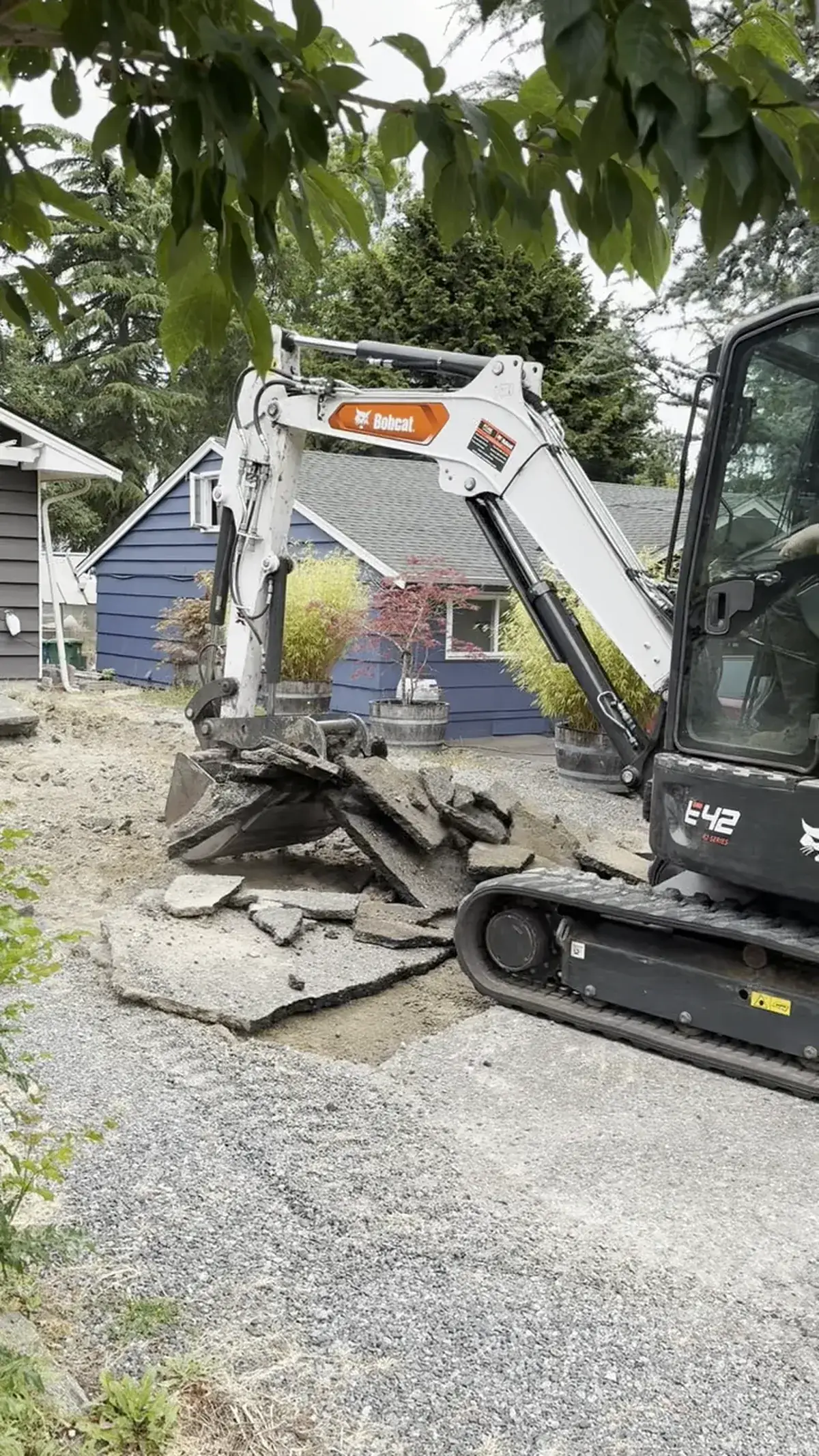
Haul-off is where site work most reliably stalls. A subcontractor without their own trucks depends on a third-party hauler being available. When that hauler is busy — and in a strong construction market they frequently are — the excavation stops. A spoil pile sits in the middle of your site, the machine that dug it sits idle, and your schedule slips through no fault of the machine or the operator.
A subcontractor who owns their fleet removes that dependency entirely. The dirt leaves when the dig finishes. Material arrives when the crew is ready for it. There is no coordination gap between the excavator and the hauler because they are the same company. On a time-sensitive commercial project, that single factor can be worth more than a lower bid from a crew that has to wait on someone else’s trucks.
Read the Exclusions, Not Just the Number
When the bids come in, the most revealing part is not the price — it is the exclusions.
Excavation involves conditions no one can see from the surface. Rock, high groundwater and buried debris from prior site use are all real possibilities, and none of them can be priced accurately before they are encountered. A professional bid handles this honestly: it prices the known conditions, usually from a geotechnical report, and states plainly in writing what is excluded.
A bid with no exclusions at all is the red flag. It means one of two things: the contractor has not thought carefully about subsurface risk, or they intend to absorb the optimism now and recover it through change orders later. Neither is what you want. The bid that names its exclusions is the more trustworthy one, even when it is not the lowest.
Questions Worth Asking Directly
Pulling it together, the short list before you sign:
- What is your L&I registration number, and are you bonded and insured?
- What equipment do you own outright, and what do you rent?
- Do you own your trucks, or subcontract the hauling?
- Can you show me references on projects of similar size and type?
- How do you handle rock, groundwater or unsuitable soils if you hit them?
- What does your bid exclude, and why?
- How do you sequence around inspections to keep the project moving?
The answers, taken together, separate a crew that will protect your schedule from one that will test it.
The Bottom Line
The cheapest excavation bid is rarely the cheapest outcome. A crew that owns its equipment, hauls its own material, prices subsurface risk honestly, and sequences cleanly around inspections costs less over the life of the project than a low bid that stalls on haul-off and recovers its margin through change orders.
DirtRaptor works as an excavation and site work subcontractor across Snohomish, King, Skagit and Pierce County — licensed, insured, own fleet, own trucks, and honest written exclusions on every bid. To discuss a project, request a quote.
Frequently Asked Questions
What licensing should an excavation contractor have in Washington?
+
A legitimate excavation contractor in Washington should hold a registered contractor number with L&I, carry general liability insurance, and be bonded. For any work involving hauling on public roads, they should also hold the appropriate USDOT authority. Ask for the numbers, not just the assurance — registration status is public and verifiable in minutes.
How do I know if an excavation sub can handle my project size?
+
Ask what equipment they own outright versus rent, how many operators they run, and for references on jobs of comparable scope. A crew that owns its machines and trucks controls its own schedule; one that rents everything is dependent on availability. Comparable references matter more than years in business — a long-established residential crew is not automatically ready for a multi-acre commercial pad.
Why does it matter whether an excavation sub owns their trucks?
+
Haul-off is where site work most often stalls. A subcontractor without their own trucks depends on a third-party hauler showing up, and when that hauler is busy, the excavation stops with a spoil pile sitting on the site. A sub that owns its fleet removes that dependency — spoil leaves when the dig finishes, not days later, which directly protects your schedule.
What is a red flag when hiring an excavation contractor?
+
The clearest red flag is a bid with no written exclusions. Rock, groundwater and buried debris cannot be seen from the surface, and a bid that pretends otherwise is either naive or is setting up a change-order fight later. A professional bid prices known conditions and states plainly what is excluded. Reluctance to provide licensing numbers or references is the other obvious warning.
Related Services
