
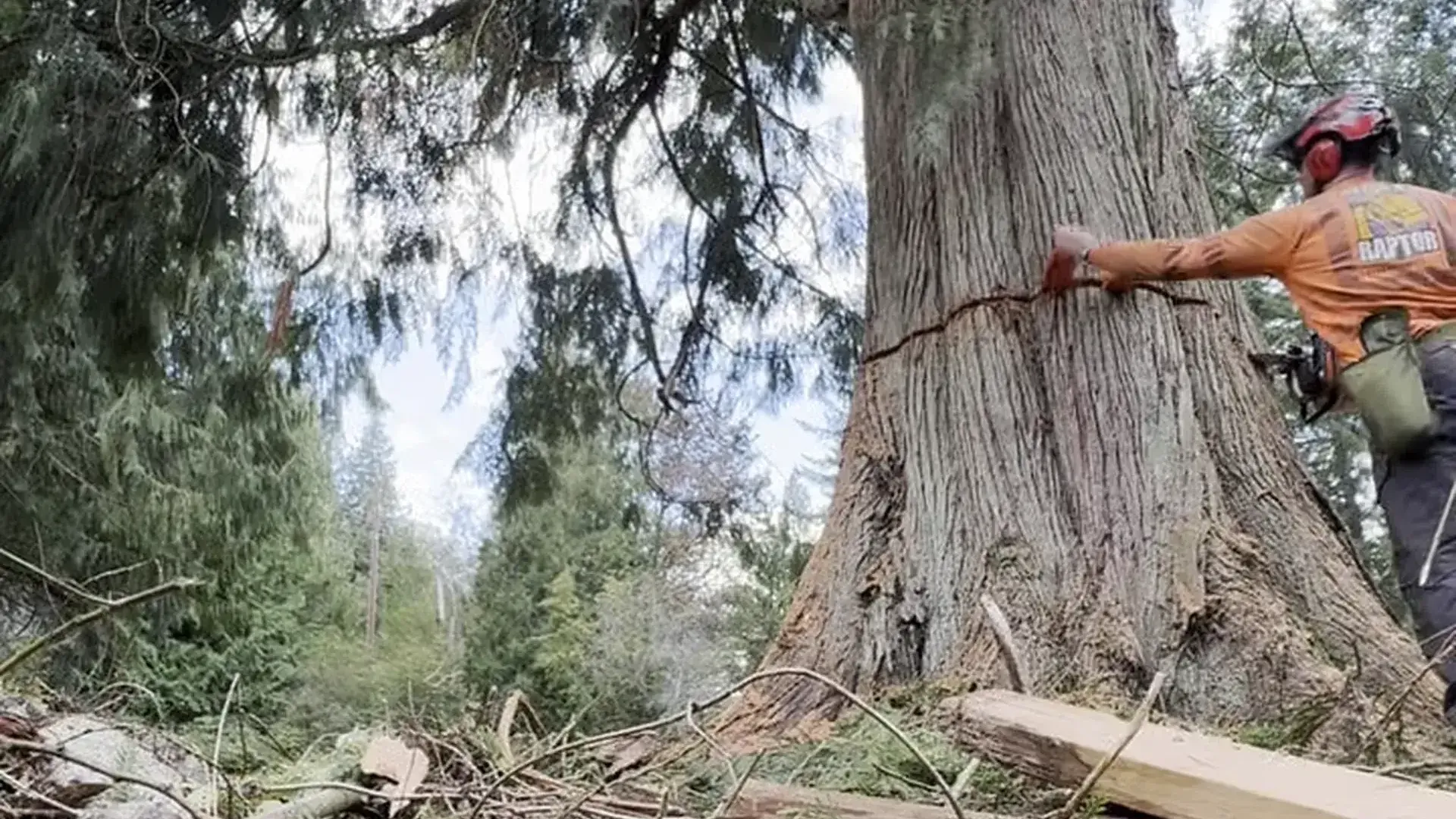
How to spot a tree likely to fail in a Western Washington windstorm: leans, cracks, fungus, dead tops and root problems, plus what to do before the storm hits.
Every fall the same thing happens across Snohomish and King County. The rain comes back, the ground soaks through, and then the first real windstorm rolls in from the south. Trees that have stood for decades go over onto roofs, cars, fences and power lines, and most of them gave warning signs long before they failed.
The good news is that you do not need to be an arborist to notice most of those signs. A slow walk around your property with a critical eye, done now rather than after the first big storm, will tell you which trees are fine and which ones deserve a professional look.
Why Western Washington Trees Fail in Winter
Our windstorms are not unusually violent by national standards. What makes them dangerous is timing. By the time the strong fall and winter wind events arrive, weeks of rain have turned the soil around tree roots to mush. A tree that would easily ride out the same wind in August can be pried out of saturated ground in November.
Much of the region also sits on dense glacial till, a hard, compacted layer that roots struggle to penetrate. Trees on till often grow wide, shallow root plates instead of deep anchors. Add saturated topsoil above that hard layer and you get the classic Pacific Northwest failure: a whole tree tipping over with its root plate attached, sometimes with no visible damage to the trunk at all.
Finally, there is exposure. Trees that grew up in a stand protect each other from wind. When a lot is cleared for a new house and a few tall firs are left standing alone, those trees suddenly carry wind loads they never adapted to. Newly exposed trees at the edge of a clearing are some of the most likely to fail in their first few winters.
Warning Signs You Can Check Yourself
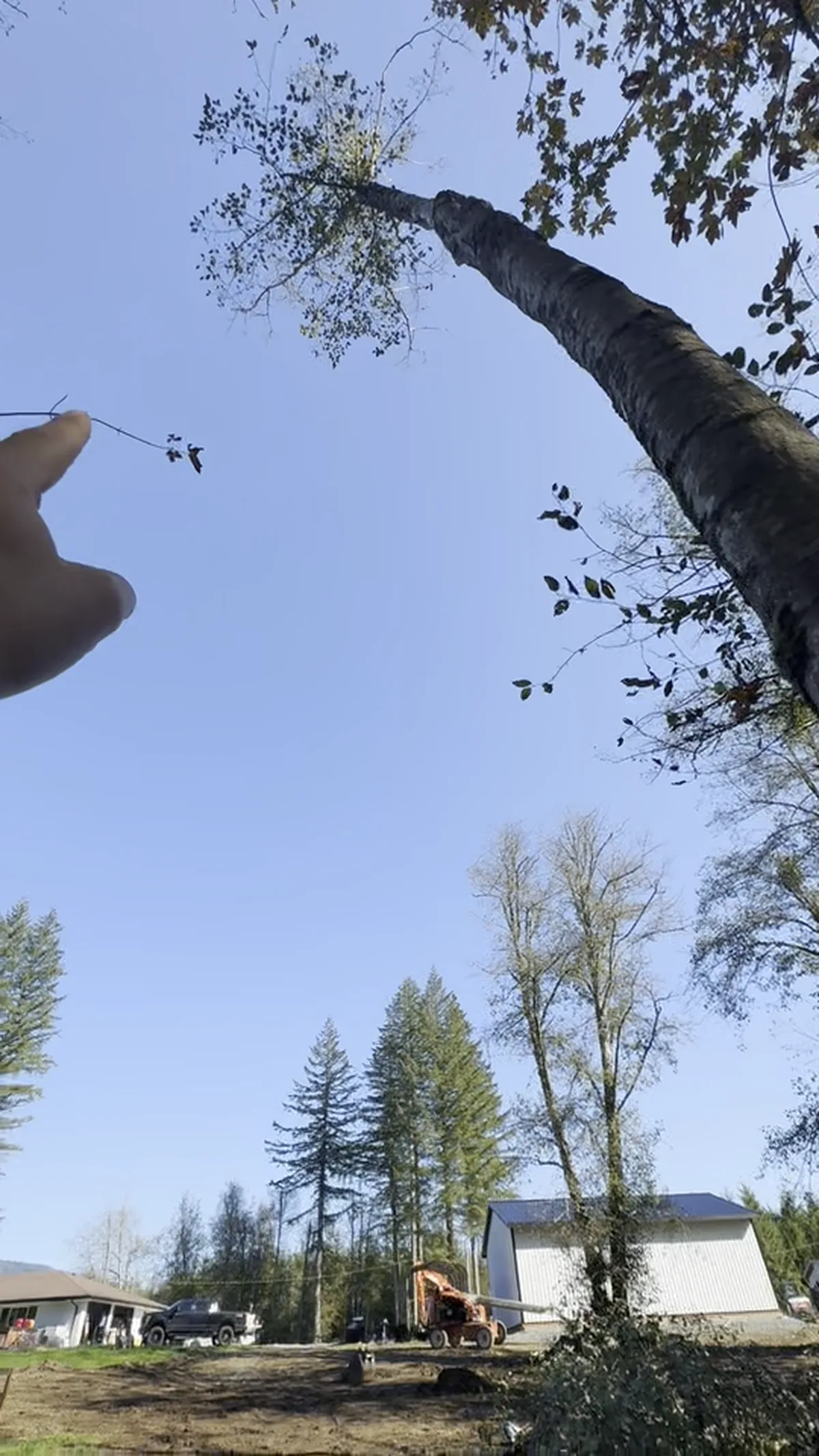
A lean that is new or getting worse
Plenty of trees grow with a lean and stand that way for a century. What matters is change. Compare the tree to an old photo, or to the line of a nearby building. Then look at the ground on the side away from the lean. Cracked, mounded or lifted soil there means the root plate is starting to move, and that tree needs attention now, not next season.
Cracks, splits and weak unions
Look for vertical cracks in the trunk, especially ones that go deep or that you can see daylight through. Also look where the trunk splits into two or more main stems. A tight V-shaped fork with bark pinched between the stems is weaker than a wide U-shaped one, and it is a common place for big trees to split apart in wind.
Fungus, mushrooms and soft wood
Mushrooms around the base of a tree, or shelf-like conks growing on the trunk, usually mean decay inside. The fungus you can see is the fruiting body. The real damage is in the wood or roots behind it. Push a screwdriver gently into the wood near the base: if it sinks in easily, the tree is rotting. Douglas fir in our area is especially prone to root rots that weaken the anchor while the top still looks green and healthy.
Dead tops and hanging limbs
A dead top, large dead branches, or broken limbs caught up in the canopy (often called widow-makers) are obvious hazards. Dead wood is brittle and comes down first in wind. Even if the rest of the tree is sound, those pieces can do serious damage to a roof or a person.
Cavities, bark loss and old wounds
Open cavities, large patches of missing bark, and old wounds from a lightning strike, construction damage or a vehicle all let decay into a tree. A small cavity is not automatically a problem, but a large one in the lower trunk can mean the tree is hollow inside.
Root damage and recent construction
Roots are easy to forget because you cannot see them. If a driveway, foundation, utility trench or septic line was dug within the last few years close to a big tree, its roots may have been cut on that side. Trees with severed roots can look fine for several years, then fail in a storm with the root plate pulling out on the damaged side.
Which Trees Deserve Extra Attention
Some species simply fail more often in our storms:
- Red alder grows fast, lives a relatively short life and often declines from the inside out. Alders leaning over pastures, fences and outbuildings are one of the most common winter failures we see.
- Black cottonwood has brittle wood and drops big limbs, and it is common along rivers and creeks around Snohomish, Monroe and Arlington.
- Bigleaf maple is a beautiful tree, but its heavy limbs and tendency toward decay at old pruning cuts make it a frequent limb-drop problem.
- Douglas fir and western red cedar are strong, wind-firm species, but root rot and exposure after nearby clearing can still bring them down, and when they fail, they are big enough to do serious damage.
What to Do When You Find a Problem
Not every warning sign means a tree has to come down. Sometimes removing a dead top, reducing an overextended limb, or thinning the canopy to let wind through solves the problem and keeps a tree that adds real value to the property. That decision should come from an assessment on site, not a guess from the ground.
If removal is the right call, schedule it before the storm season peaks. A planned removal lets the crew rig the tree, lower it in sections over a house or fence, and protect the lawn and driveway. An emergency removal with a tree already resting on a roof is slower, more dangerous and more expensive.
Two practical steps before any cutting:
- Check the rules. Tree permits vary a lot by city. Many unincorporated Snohomish County lots need no permit for a single tree, while several King County cities regulate significant trees closely and often treat hazard trees separately. A good crew will tell you what applies to your address.
- Plan for the ground after. A removed tree leaves a stump and often a root mat. Decide whether you want the stump ground down for a lawn, or pulled out and the hole filled so the area can be built on or regraded.
How DirtRaptor Handles Hazard Trees
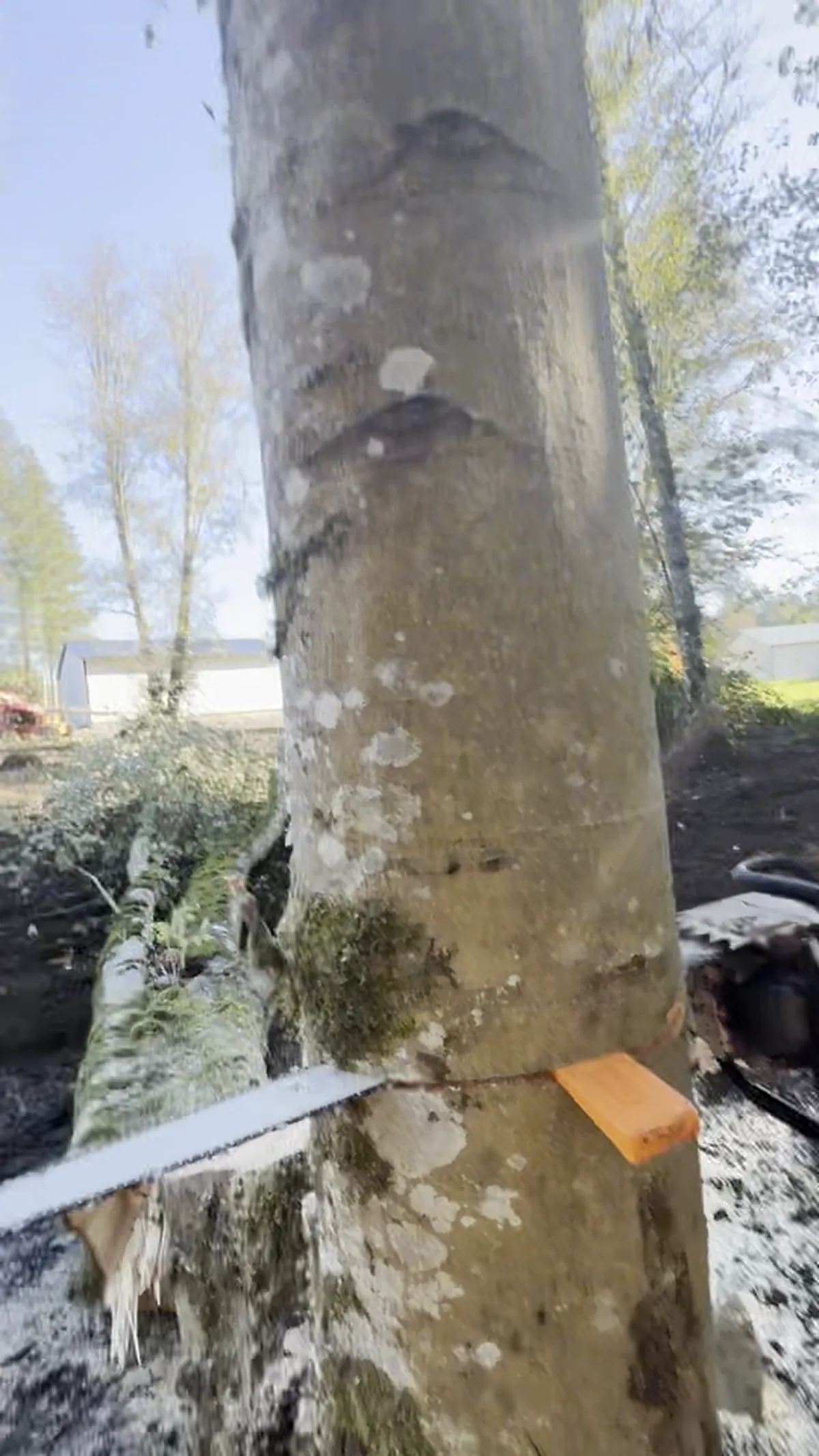
Our arborist-led crew starts every hazard tree job with an assessment: species, lean, decay, root condition and, most importantly, what is underneath. Trees with open ground around them can be felled whole using a proper face cut, hinge and wedges to steer them exactly where they need to go. Trees over houses, fences and power lines are taken down in sections and lowered instead of dropped.
Because we also run excavation, the job does not end when the tree is down. We can pull the stump with the excavator, fill and grade the hole, and haul the logs and brush away on our own trucks, or buck the wood into firewood rounds if you want to keep it. One crew, one visit.
If you have a tree you are not sure about, the best time to get it looked at is before the next windstorm. Send us a few photos and the address, and we will come out for a free site walk and tell you honestly whether it needs to come down.
Frequently Asked Questions
How can I tell if a tree is going to fall?
+
No one can predict an exact failure, but the warning signs are well known: a lean that is new or getting worse, soil heaving or cracking on the opposite side of the lean, deep cracks or splits in the trunk, mushrooms or shelf fungus at the base, large dead limbs or a dead top, and cavities or soft wood. One sign is a reason to watch a tree. Two or more, especially near a house, is a reason to have it assessed.
Are some trees more likely to fail in Pacific Northwest storms?
+
Yes. Red alder and black cottonwood grow fast, have weaker wood and often decline from the inside, so they fail more often in wind. Bigleaf maple can drop large limbs. Douglas fir is strong but is vulnerable to root rot, which can make a healthy-looking tree uproot. Any tree left newly exposed after nearby clearing is also at higher risk, because it grew up sheltered by its neighbors.
When is the best time to remove a hazard tree?
+
Before the storm, not after. Fall is the time to look at trees near your house, driveway and power lines, because Western Washington windstorms usually arrive with saturated soil from fall rain. A planned removal is safer and almost always cheaper than an emergency one with a tree already on the roof.
Do I need a permit to remove a hazard tree?
+
It depends on the city. Many Snohomish County addresses can remove a single tree on a private lot without a permit, while cities like Kirkland, Redmond, Sammamish, Lake Forest Park, Shoreline, Mercer Island, Seattle and Edmonds regulate significant trees. Most of those cities treat a documented hazard tree differently from a routine removal, but they still want to know about it. Check before cutting.
What should I do if a tree falls on my house during a storm?
+
Get everyone out of the affected part of the house, stay away from any downed power lines, and call 911 if anyone is hurt or lines are involved. Then call your insurance company and a tree crew with the equipment to lift the tree off safely. Do not try to cut a tree that is under tension or resting on a structure yourself.
Related Services
