
Snohomish · King · Skagit · Pierce
Emergency & Storm Damage Tree Removal
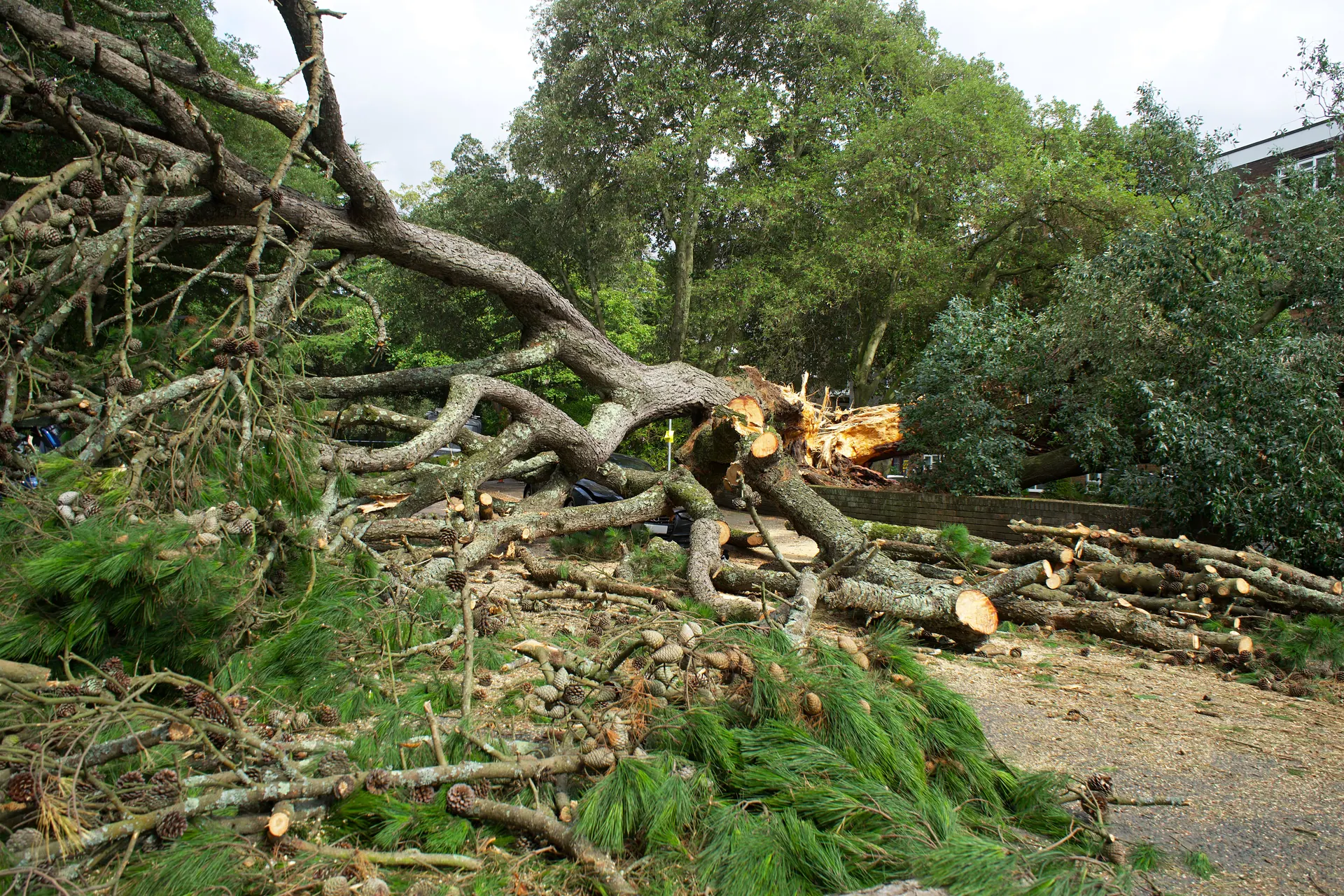
Trees down on roofs, cars, driveways and fences after a storm, removed safely and cleaned up. Storm damage gets priority on our schedule.
When a Tree Comes Down in a Storm
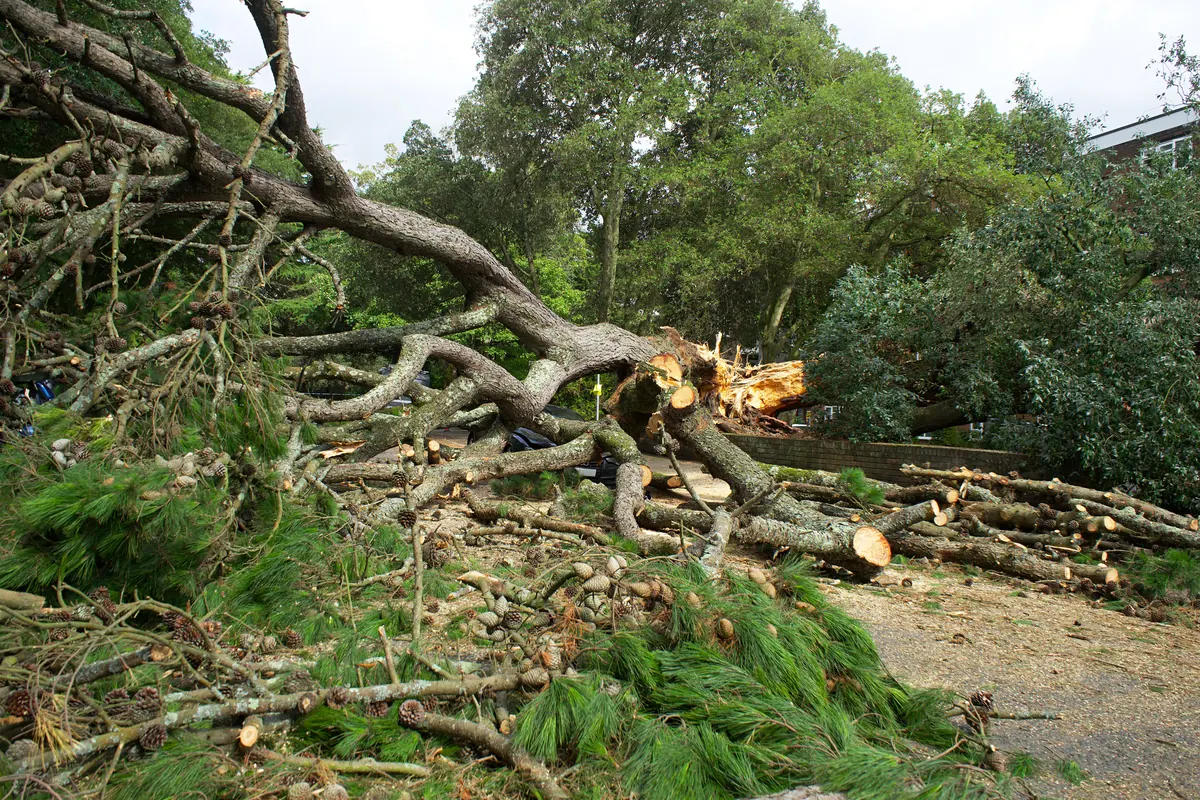
Western Washington windstorms usually arrive after weeks of fall rain, when the soil around tree roots is saturated. That is when big Douglas firs uproot, brittle cottonwoods and alders snap, and heavy bigleaf maple limbs come down on roofs, cars, fences and driveways.
A tree resting on a structure is one of the most dangerous jobs in tree work. The wood is under tension and compression in ways that are hard to read, and cutting in the wrong place can drop the load further onto the house or kick the trunk back. It is not a job for a homeowner with a chainsaw.
DirtRaptor is an arborist-led crew that also runs excavators and trucks, so a storm job does not stop at cutting the tree off the house. We remove the tree in controlled pieces, clear the driveway, pull or grind the stump if you want it gone, and haul the wood and debris away. Storm damage gets priority on our schedule.
Worth Knowing
If a tree is touching a power line, stay well away and call your utility first. Tree crews cannot safely work near energized lines until the utility has made them safe. For anything involving injuries or lines on the ground, call 911.
The Process
How a Storm Damage Job Runs
Every storm job is different, but the order matters. Safety first, then the structure, then the cleanup.
Safety Check
We look for power lines, structural damage and anything under tension before anyone cuts. If the utility needs to be involved, that happens first.
Controlled Removal
The tree is taken off the structure in pieces, rigged and lowered where needed, so nothing drops further onto the roof, car or fence.
Cleanup & Haul-Off
Logs, limbs and debris are cleared and hauled on our own trucks, or bucked into firewood rounds if you want to keep the wood.
Stump & Ground Repair
If the stump or root plate needs to come out, we pull or grind it and fill and grade the hole while we are still on site.
Scope
What Storm Response Covers
From a single limb on a fence to a large fir across the house, the scope is set on site once we see what is down.
Trees on Houses & Roofs
Controlled removal of trees resting on structures, taken off in pieces to avoid further damage.
Blocked Driveways & Roads
Fallen trees cut and cleared so vehicles can get in and out again.
Hanging & Split Limbs
Broken limbs caught in the canopy and split leaders brought down before they fall on their own.
Uprooted Trees & Root Plates
Whole trees that tipped with their roots attached, cut up and the root plate pulled and the hole filled.
Debris Haul-Off
Wood, brush and debris loaded and hauled on our own trucks, not left in a pile.
Documentation
Photos of the damage before and during the work, which helps with insurance claims.
Why Us
Why DirtRaptor for Emergency Tree Removal
Owner On The Machine
You talk to the person doing the work, not a salesperson who has never seen your site.
Arborist-Led Tree Work
Trees and dirt work handled by one company on one mobilisation — rare in this trade.
Our Own Trucks
Haul-off is not a marked-up subcontractor line. It is a truck we own and a schedule we control.
Since 2019
Years of Pacific Northwest ground, wet seasons, and county permit desks.
Honest Exclusions
Rock, groundwater and buried debris are excluded in writing, not discovered as a surprise invoice.
Free On-Site Quotes
A real number from a real site walk, not a range guessed over the phone.
Pricing
What Drives Storm Removal Cost
Storm jobs are priced on what is down and what it is resting on. These factors move the number most.
What the Tree Is On
A tree across open lawn is a quick job. A tree resting on a roof or car needs rigging, more crew time and far more care.
Size & Species
A large Douglas fir or cedar is a very different job from an alder or a single limb, in time, equipment and debris volume.
Access & Cleanup
Whether a machine can reach the tree, and whether the wood is hauled away or left on site, change the scope.
The fastest route to an accurate number is a site walk. Quotes are free and there is no obligation.
Get My Free QuoteQuestions
Frequently Asked Questions
What should I do if a tree falls on my house?
+
Get everyone out of the affected part of the house, stay away from any downed power lines, and call 911 if anyone is hurt or lines are involved. Then call your insurance company and a tree crew. Do not try to cut a tree that is resting on a structure yourself.
Do you handle storm damage on weekends?
+
Storm damage gets priority on our schedule. Call (425) 232-4858 and tell us what is down and where, and we will tell you how quickly we can get there.
Will insurance pay for tree removal after a storm?
+
Often, when a tree damages a covered structure like a house or garage. Coverage varies by policy, so check with your insurer. We take photos before and during the work to help with your claim.
Can you remove the stump after a storm removal?
+
Yes. Because we run excavators as well as tree crews, we can pull or grind the stump and fill and grade the hole on the same visit.
How can I prevent storm damage next year?
+
Have trees near the house assessed in late summer or early fall, before the soil saturates. Leaning, cracked, decayed or dead trees can be removed or reduced on your schedule instead of after a storm.
Which areas do you cover for storm damage?
+
Snohomish County and north King County, including Everett, Marysville, Lake Stevens, Arlington, Snohomish, Monroe, Mill Creek, Bothell, Woodinville, Kirkland, Redmond and Bellevue.
Do I need a permit to remove a storm-damaged tree?
+
Most cities treat a tree that is down or an immediate hazard differently from a routine removal, but some still want to be notified afterward. We document the damage with photos to make that easy.
Question not answered here? Send us the details and we will come back to you.
Often Booked Together
Related Services
Combining scopes on one mobilisation is almost always cheaper than booking them separately.
Tree Removal
Arborist-led removal, thinning and stump grinding. Because the same crew runs the trees and the excavation, both happen on one mobilisation.
Stump Grinding & Removal
Stumps ground below grade or pulled out whole with the excavator, then the hole filled and graded so the ground is usable again.
Hauling & Dump Truck Service
Own trucks, own schedule. Spoil hauled off, material delivered, bins dropped — without waiting on a subcontractor.
Across the Region
Storm Damage Across the Region
The worst tree damage in Snohomish and King County usually comes with the first strong windstorms of fall and winter, after the rain has saturated the soil. Douglas firs on glacial till tip over with their root plates attached, while alder and cottonwood along creeks and pastures snap or drop big limbs.
Newly exposed trees at the edges of fresh clearings and subdivisions are some of the most likely to fail, because they grew up sheltered by trees that are now gone. If you have a tree you are worried about, having it assessed before the storm is always safer and cheaper than an emergency removal.
Where we do emergency tree removal
In Snohomish County: Everett, Lynnwood, Bothell, Mill Creek, Mountlake Terrace, Edmonds, Mukilteo, Marysville, Snohomish, Lake Stevens, Monroe, Arlington, Brier, plus Stanwood, Granite Falls, Sultan, Gold Bar, Woodway.
In King County: Woodinville, Kenmore, Kirkland, Redmond, Bellevue, Shoreline, Lake Forest Park, Sammamish, Duvall, Seattle, plus Issaquah, Snoqualmie, North Bend, Carnation, Renton, Newcastle, Mercer Island.
In Skagit County: Mount Vernon, Burlington, Sedro-Woolley, Anacortes.
In Pierce County: Tacoma, Puyallup, Bonney Lake, Gig Harbor.
Emergency Tree Removal Across Four Counties
Serving Snohomish, King, Skagit and Pierce County, Washington. Send photos and a rough scope and we will come back with a real number.
