
Snohomish · Snohomish County
Grading & Drainage in Snohomish, WA
Grading, French drains, retaining walls and RV and equipment pads across Snohomish, from the Snohomish and Pilchuck valleys. Built so water moves away from the house instead of toward it.
Why drainage matters on Snohomish properties
River alluvium, silt and peat on the valley floors, with a high water table most of the year. The hillsides are glacial till. That is the root of most wet-yard, wet-crawlspace and failing-patio problems we see. Water that cannot soak in runs along the surface or perches on the hard layer until it finds the lowest point.
Downtown sits on the Snohomish River just below where the Pilchuck joins it. The valley floors are wide and flat; the hills above them on both sides are wooded and steep in places. Slopes push water downhill onto the next lot, and flat ground leaves it nowhere to go. Getting the grade right is cheaper than fixing what water does to a foundation.
The Snohomish and Pilchuck rivers flood, and much of the valley sits in the mapped floodplain. Ditches, sloughs and farm drainage are part of almost every lowland job. Where drainage can legally discharge depends on these features, so we plan the outlet first and the trench second.
Common grading projects in Snohomish
Wet yards and crawlspaces
Regrading and French or curtain drains for Snohomish yards that stay soggy all winter because water perches on the hard till below.
Retaining walls on slopes
Block and rock retaining walls that hold back sloped Snohomish yards and driveways, built with drainage behind them so they last.
Pads for RVs, shops and equipment
Compacted gravel pads for RVs, trailers, shops and equipment on Snohomish properties, built thick enough not to rut in the wet season.
Grading away from the foundation
Reshaping the ground around Snohomish homes in Historic downtown and Pilchuck so it falls away from the house, the cheapest fix for water at the foundation.
Ditches and culverts
Cleaning and regrading drainage ditches, and setting culverts under driveways, on the low, wet ground around Snohomish.
What our grading work in Snohomish covers
- Retaining Walls
- French Drains & Footing Drains
- Rough & Finish Grading
- RV & Equipment Pads
- Yard Drainage Correction
- Erosion Control
Permits & Rules
Grading and retaining wall permits in Snohomish
Inside city limits, the City of Snohomish handles grading permits; outside them, Snohomish County Planning and Development Services (PDS). Small regrading and yard drains usually do not need one, but larger volumes of cut or fill, work in a critical area, or changes to how water leaves the property often do.
Retaining walls taller than about four feet, or walls holding back a driveway or slope, typically need engineering and a permit. We build to the approved plan and can tell you on the site walk when a wall is likely to need one.
Cost & Timing
What affects the cost of grading in Snohomish
We do not publish flat prices because no two Snohomish sites are the same. These are the things that move the number most here.
Slope and access
Steep Snohomish lots take smaller machines, more careful staging and sometimes engineering, which adds time compared with flat, open ground.
Soft ground
Where Snohomish soils are soft or wet, over-excavation, fabric and imported rock are often part of the job, and we price that in up front.
Buffers and permits
Work near Snohomish's rivers, creeks, lakes or shoreline can need permits and limits on where machines go. That affects scope and schedule more than price.
Size of the property
On Snohomish acreage, longer haul distances inside the property and bigger volumes change the math. Bigger jobs often cost less per unit.
Haul-off and disposal
How much material leaves the site, and what it is, drives cost. Our own trucks keep that predictable on Snohomish jobs.
When to schedule grading in Snohomish
Grading in Snohomish goes best in the drier months, when soil compacts properly and trenches stay open. Wet-season work is doable with erosion control and the right material, and we plan for it in the quote.
Snohomish's till soils hold water through the winter, which is when drainage problems show up. That is a good time to see where water goes, and the dry season is the time to fix it.
On Snohomish's floodplain ground, the river sets the calendar. Low-lying work is planned for the dry season, after high water has dropped.
Where We Work
Grading and drainage across Snohomish
The City of Snohomish is a historic river town with an antique-filled downtown, but most of the properties that call DirtRaptor are on the farms, acreage and wooded hillsides around it. Pastures, shops, barns and long driveways are standard work here.
We regrade yards, install French drains and curtain drains, build block and rock retaining walls, and set gravel RV and equipment pads across Historic downtown, Pilchuck, Riverview, Cathcart area, Machias area and Three Lakes area.
Historic homes in town, and around it a mix of farms, horse properties, older rural homes on acreage and newer homes on hillside lots. Older lots often have no real drainage at all, while newer ones sometimes have drains that were never connected. We find out which before we dig.
We also do grading nearby in Mill Creek, Everett, Monroe and Lake Stevens. See everything we do in Snohomish, read our full guide to grading, or browse all service areas.
Why DirtRaptor
Why Snohomish owners call us for grading
Owner on the machine
On Snohomish jobs you talk to the person who walks the site, writes the quote and runs the equipment.
Trees and dirt, one crew
If trees are in the way of your Snohomish project, we take them down ourselves instead of waiting on a separate tree service.
Our own trucks
Haul-off and deliveries run on our schedule along SR 9 and US 2, not a subcontractor's.
Built for slopes
We plan machine placement, drainage and erosion control for Snohomish's sloped ground before we start.
How a grading job runs
- 01
Site Assessment & Water Tracing
- 02
Design & Elevations
- 03
Excavation & Base Preparation
- 04
Build, Drainage & Backfill
Real Jobs
Recent DirtRaptor work near Snohomish
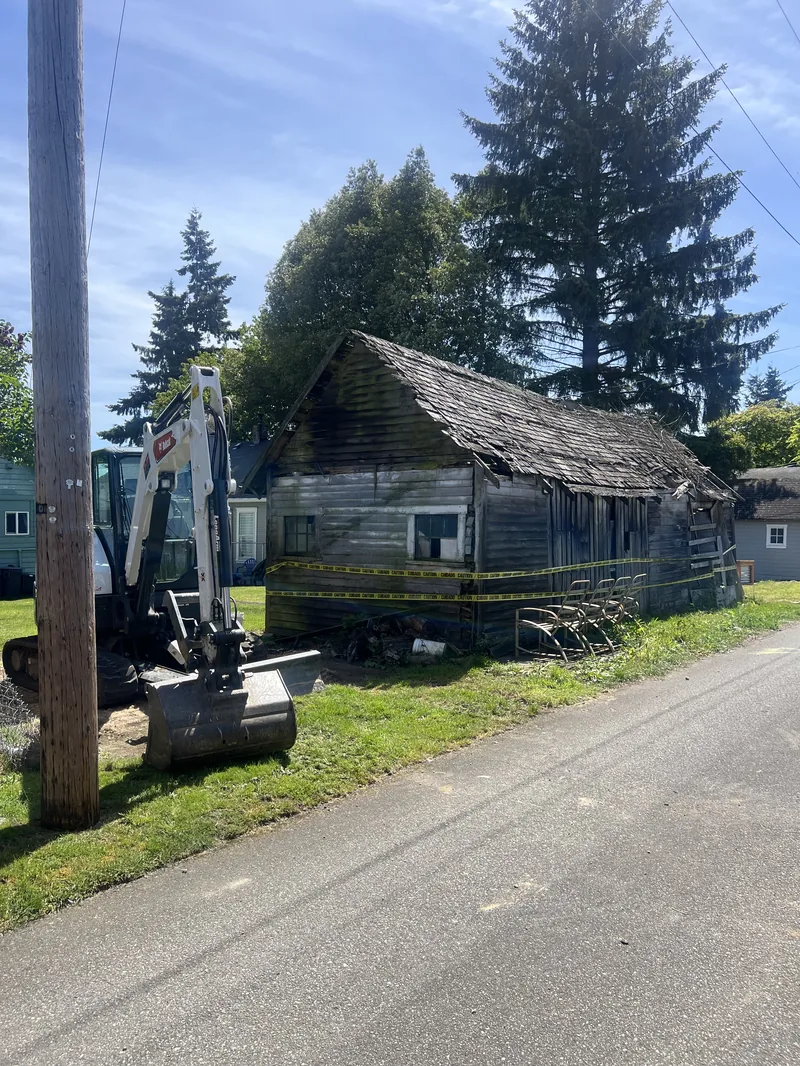
Demolition · Everett, WA
Condemned 100-Year-Old Shed Teardown
A 100-year-old shed, condemned and unsafe, brought down and hauled off — the site left graded flat and clean.
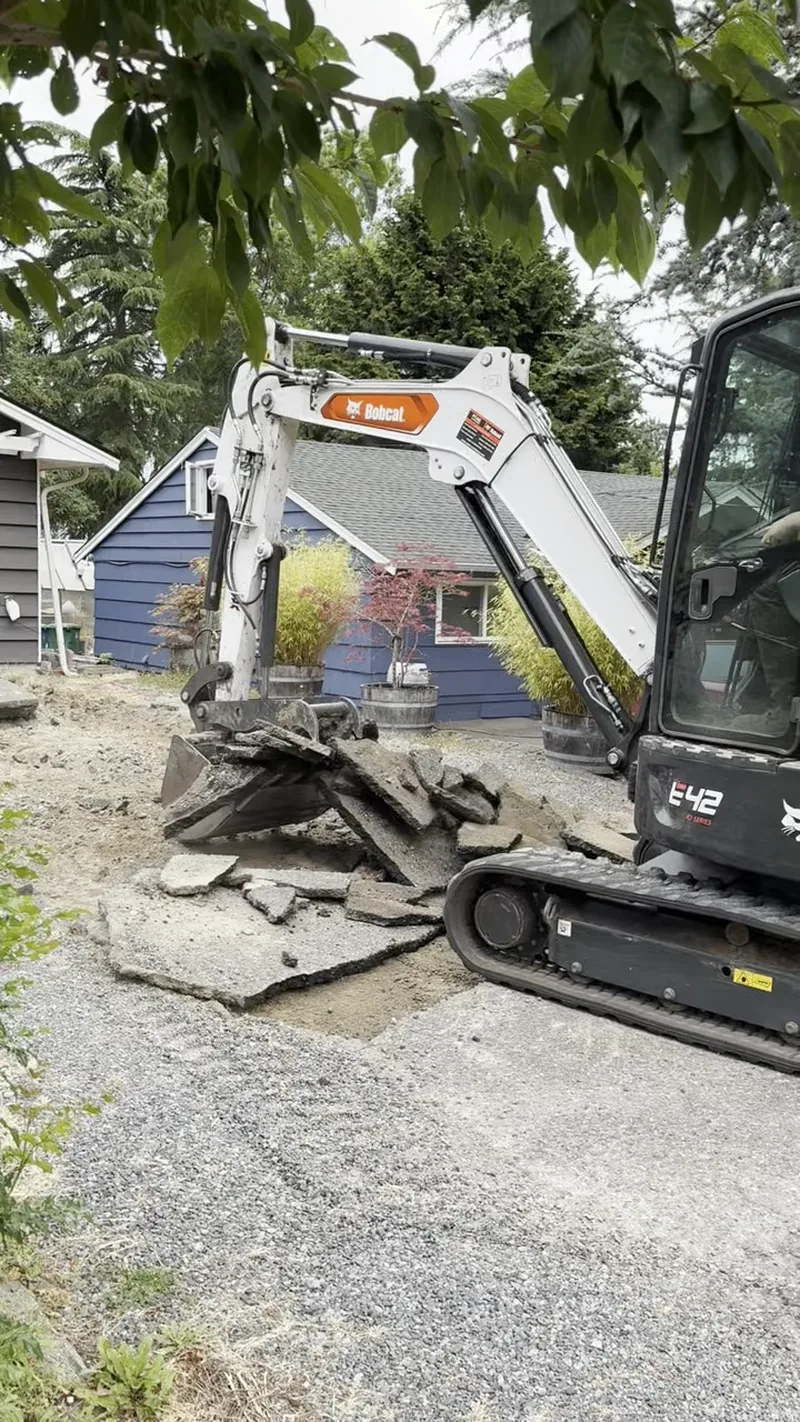
Demolition · Edmonds, WA
Driveway Removal & Concrete Prep
Tearing out an old blacktop driveway and prepping the ground for a new concrete pour — broken material hauled off, base left clean and ready.
Questions
Grading & Drainage in Snohomish: FAQs
Why does water collect around homes in Snohomish?
+
River alluvium, silt and peat on the valley floors, with a high water table most of the year. The hillsides are glacial till. When water cannot soak in, it follows the surface toward the house. Regrading so the ground falls away from the foundation, plus a drain where needed, usually solves it.
Do retaining walls need a permit in Snohomish?
+
Walls over about four feet, or walls supporting a driveway, building or slope, usually need engineering and a permit from the City of Snohomish (or Snohomish County Planning and Development Services (PDS) outside city limits). Shorter landscape walls often do not. We confirm before building.
Where can drainage water go on my Snohomish property?
+
It has to go somewhere approved: an existing storm system, a dispersion area or an infiltration trench where the soil allows. The Snohomish and Pilchuck rivers flood, and much of the valley sits in the mapped floodplain. Ditches, sloughs and farm drainage are part of almost every lowland job. We plan the outlet before we trench.
How much does grading cost in Snohomish?
+
It depends on the site, so we quote after a free site walk rather than guessing on the phone. The biggest drivers in Snohomish are usually slope and access, soft ground, buffers and permits. You get a written number with inclusions and exclusions spelled out.
When is the best time to schedule grading in Snohomish?
+
Grading in Snohomish goes best in the drier months, when soil compacts properly and trenches stay open. Wet-season work is doable with erosion control and the right material, and we plan for it in the quote.
My Snohomish property floods. Can you still build a pad or shop?
+
Often, but floodplain rules decide how. Fill in the floodplain is regulated and sometimes not allowed, and new structures may need to be raised. We help you understand the constraints and work to the approved plan.
Can you clear blackberries and brush off an old pasture?
+
Yes. Overgrown pasture is one of the most common jobs around Snohomish. We clear the brush and roots, pull stumps, haul or grind the debris and leave the ground ready to reseed or fence.
How much does a retaining wall cost per foot?
+
Face square foot is the usual unit, but cost per foot rises steeply with height because the work behind the wall grows faster than the wall itself. A two-foot garden wall and a five-foot structural wall are different trades. Site access and drainage requirements move it further.
Ready for a real number in Snohomish?
Send the address and a few photos. We walk the site for free and come back with a written quote.
