
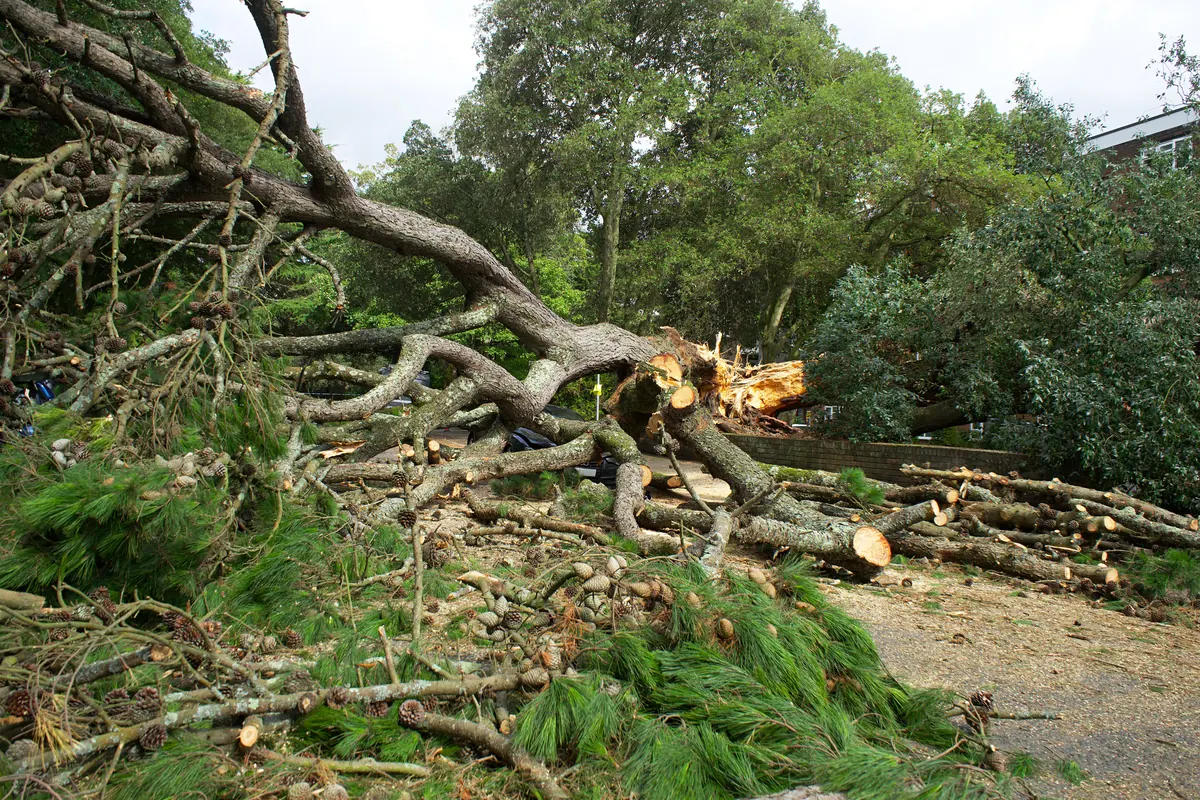
Bellevue · King County
Emergency Tree Removal in Bellevue, WA
Trees down on roofs, cars, fences and driveways in Bellevue, removed safely by an arborist-led crew and cleaned up the same visit. Storm damage gets priority on our schedule. Call (425) 232-4858.
Why trees come down in Bellevue storms
Tall Douglas fir, western red cedar and bigleaf maple, many of them on steep or tight lots. Removals near homes and view work on hillside lots are common. When the fall and winter windstorms arrive on saturated ground, those are the trees most likely to fail around Bellevue.
Glacial till over most of the city, outwash sand in places, and soft deposits around the lakes and the Mercer Slough. Saturated soil over that ground lets root plates loosen and tip, which is why whole trees go over with their roots attached here, sometimes with no visible damage to the trunk.
Rolling hills between Lake Washington and Lake Sammamish, rising to steep slopes in Somerset, Newport Hills and the Cougar Mountain foothills. Slopes, ravines and exposed edges catch the most wind, and trees left standing alone after nearby clearing are especially vulnerable in their first few winters.
Common emergency tree removal projects in Bellevue
Trees on houses and roofs
Trees and big limbs resting on homes in Somerset and Newport Hills, taken off in controlled pieces so nothing drops further onto the structure.
Blocked driveways and roads
Fallen trees across Bellevue driveways and private roads cut and cleared so you can get in and out again.
Trees down on fences and outbuildings
Alder, cottonwood and fir down across fences, barns and pastures on Bellevue acreage, cleared so animals stay in and the fence can be repaired.
Uprooted trees on slopes
Trees that tipped on Bellevue hillsides and ravine edges, removed with the root plate handled so the slope is not left open.
Hanging and split limbs
Broken limbs caught in the canopy over Bellevue yards and roofs, brought down before they fall on their own.
What our emergency tree removal work in Bellevue covers
- Trees on Houses & Roofs
- Blocked Driveways & Roads
- Hanging & Split Limbs
- Uprooted Trees & Root Plates
- Debris Haul-Off
- Documentation
Permits & Rules
Storm removals and permits in Bellevue
Bellevue regulates tree removal and has detailed critical-area rules for steep slopes and streams. Clearing and grading over set thresholds needs a permit. We confirm requirements before any work. A tree that is down or posing an immediate hazard is usually treated differently from a routine removal, but some jurisdictions still want to be told afterward. We photograph the damage before and during the work so you have a record for the City of Bellevue and for your insurer.
If a tree is touching a power line, stay away and call your utility first. Lines have to be made safe before any tree crew can work. Outside city limits, the King County Department of Local Services sets the rules for follow-up work.
Cost & Timing
What affects the cost of emergency tree removal in Bellevue
We do not publish flat prices because no two Bellevue sites are the same. These are the things that move the number most here.
Slope and access
Steep Bellevue lots take smaller machines, more careful staging and sometimes engineering, which adds time compared with flat, open ground.
Soft ground
Where Bellevue soils are soft or wet, over-excavation, fabric and imported rock are often part of the job, and we price that in up front.
Buffers and permits
Work near Bellevue's rivers, creeks, lakes or shoreline can need permits and limits on where machines go. That affects scope and schedule more than price.
Size of the property
On Bellevue acreage, longer haul distances inside the property and bigger volumes change the math. Bigger jobs often cost less per unit.
Haul-off and disposal
How much material leaves the site, and what it is, drives cost. Our own trucks keep that predictable on Bellevue jobs.
When to schedule emergency tree removal in Bellevue
Storm damage in Bellevue does not wait for good weather, and it gets priority on our schedule. The best way to avoid an emergency is an assessment in late summer or early fall, before the soil saturates.
Bellevue's till soils hold water through the winter, which is when drainage problems show up. That is a good time to see where water goes, and the dry season is the time to fix it.
At higher elevations around Bellevue, snow and freeze can close the season early, so foothill and mountain-side jobs are best booked for summer and early fall.
Where We Work
Storm response across Bellevue
Bellevue covers a lot of ground, from lakefront and Bridle Trails horse properties to the steep hillsides of Somerset and Cougar Mountain. High-value homes, steep slopes and a careful permit desk make planning the most important part of any job here.
We respond to storm damage across Somerset, Newport Hills, Bridle Trails, Lake Hills, Crossroads, Factoria, Woodridge and Lakemont. Mid-century homes in Lake Hills and Crossroads, hillside view homes in Somerset, and large new custom homes replacing older houses across the city.
Because we also run excavators and our own trucks, we can clear the driveway, pull the root plate or stump, fill the hole and haul everything away without waiting on a second company.
We also do emergency tree removal nearby in Kirkland, Redmond, Seattle and Sammamish. See everything we do in Bellevue, read our full guide to emergency tree removal, or browse all service areas.
Why DirtRaptor
Why Bellevue owners call us for emergency tree removal
Owner on the machine
On Bellevue jobs you talk to the person who walks the site, writes the quote and runs the equipment.
Trees and dirt, one crew
If trees are in the way of your Bellevue project, we take them down ourselves instead of waiting on a separate tree service.
Our own trucks
Haul-off and deliveries run on our schedule along I-405 and I-90, not a subcontractor's.
Built for slopes
We plan machine placement, drainage and erosion control for Bellevue's sloped ground before we start.
How an emergency tree removal job runs
- 01
Safety Check
- 02
Controlled Removal
- 03
Cleanup & Haul-Off
- 04
Stump & Ground Repair
Real Jobs
Recent DirtRaptor work near Bellevue
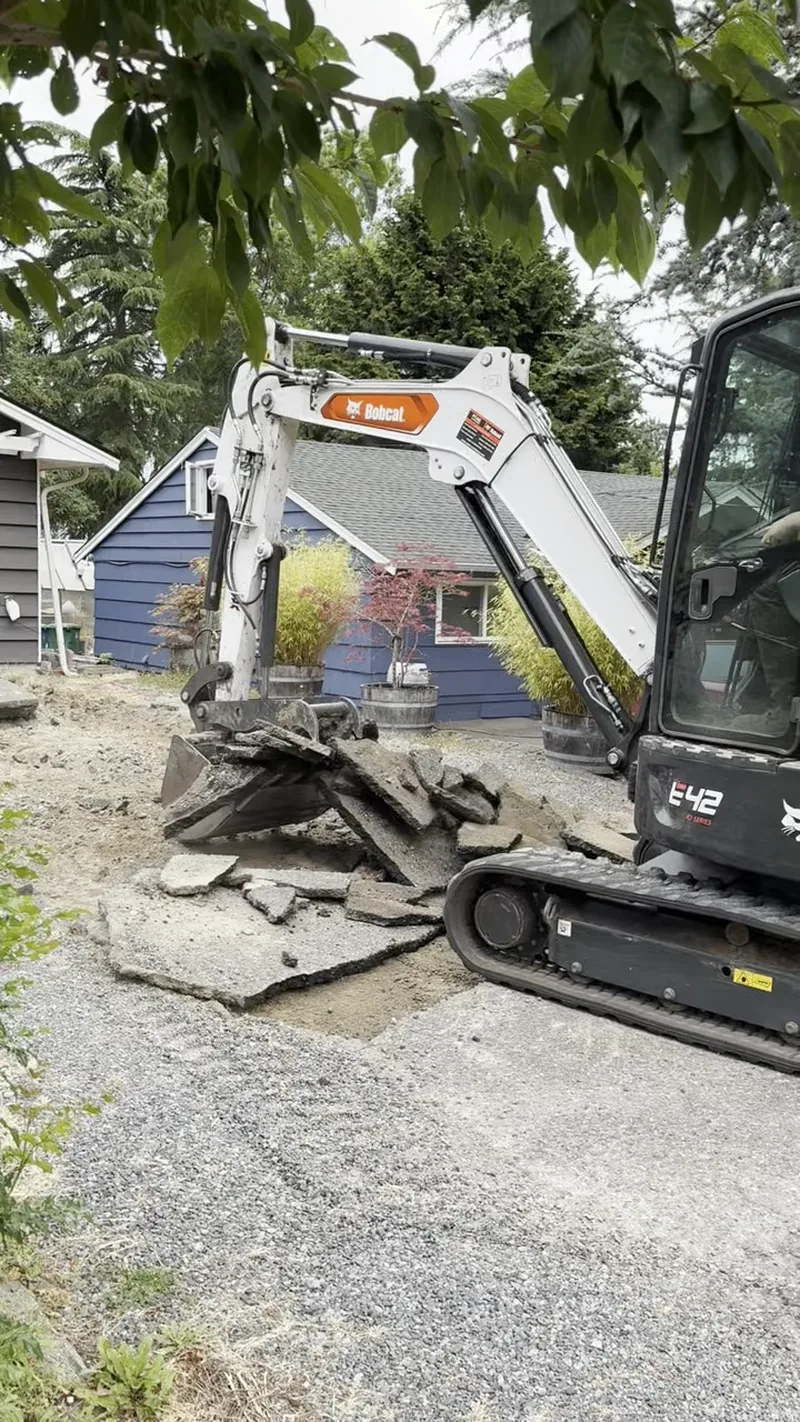
Demolition · Edmonds, WA
Driveway Removal & Concrete Prep
Tearing out an old blacktop driveway and prepping the ground for a new concrete pour — broken material hauled off, base left clean and ready.
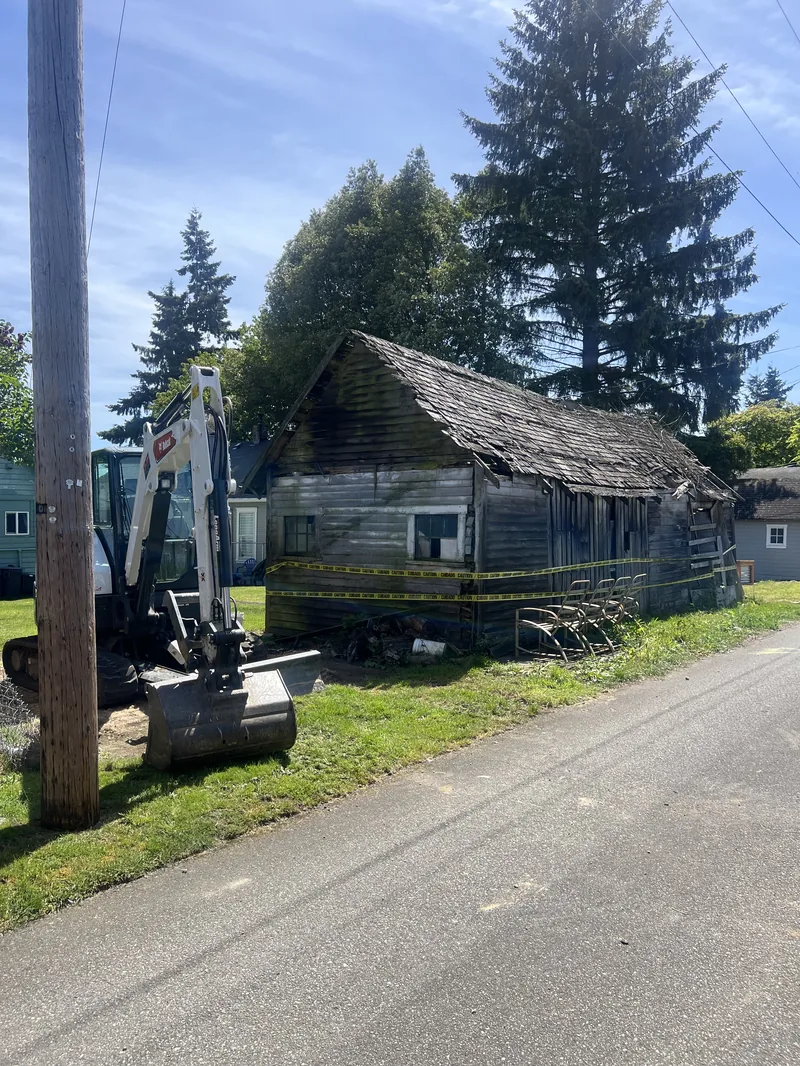
Demolition · Everett, WA
Condemned 100-Year-Old Shed Teardown
A 100-year-old shed, condemned and unsafe, brought down and hauled off — the site left graded flat and clean.
Questions
Emergency Tree Removal in Bellevue: FAQs
What should I do if a tree falls on my house in Bellevue?
+
Get everyone out of the affected area, stay clear of any downed lines and call 911 if anyone is hurt or lines are involved. Then call your insurer and call us at (425) 232-4858. Do not cut a tree resting on a structure yourself.
Which trees fail most in Bellevue storms?
+
Tall Douglas fir, western red cedar and bigleaf maple, many of them on steep or tight lots. Removals near homes and view work on hillside lots are common. Trees with a worsening lean, cracks, decay at the base or dead tops are the ones to have looked at before the next storm.
Can you remove the stump after a storm removal in Bellevue?
+
Yes. We can pull or grind the stump and fill and grade the hole on the same visit, then haul the wood and debris away on our own trucks.
How much does emergency tree removal cost in Bellevue?
+
It depends on the site, so we quote after a free site walk rather than guessing on the phone. The biggest drivers in Bellevue are usually slope and access, soft ground, buffers and permits. You get a written number with inclusions and exclusions spelled out.
When is the best time to schedule emergency tree removal in Bellevue?
+
Storm damage in Bellevue does not wait for good weather, and it gets priority on our schedule. The best way to avoid an emergency is an assessment in late summer or early fall, before the soil saturates.
Do I need a clearing and grading permit in Bellevue?
+
It depends on the volume of soil moved and the area disturbed, and steep slopes or critical areas lower the threshold. We estimate the quantities during the site walk and tell you whether a permit is likely.
Can you do excavation on a steep Somerset lot?
+
Yes. Steep lots need careful machine placement, erosion control and planned spoil haul-off so nothing is stockpiled on the slope. A geotechnical report is often part of the permit.
How can I prevent storm damage next year?
+
Have trees near the house assessed in late summer or early fall, before the soil saturates. Leaning, cracked, decayed or dead trees can be removed or reduced on your schedule instead of after a storm.
Ready for a real number in Bellevue?
Send the address and a few photos. We walk the site for free and come back with a written quote.
